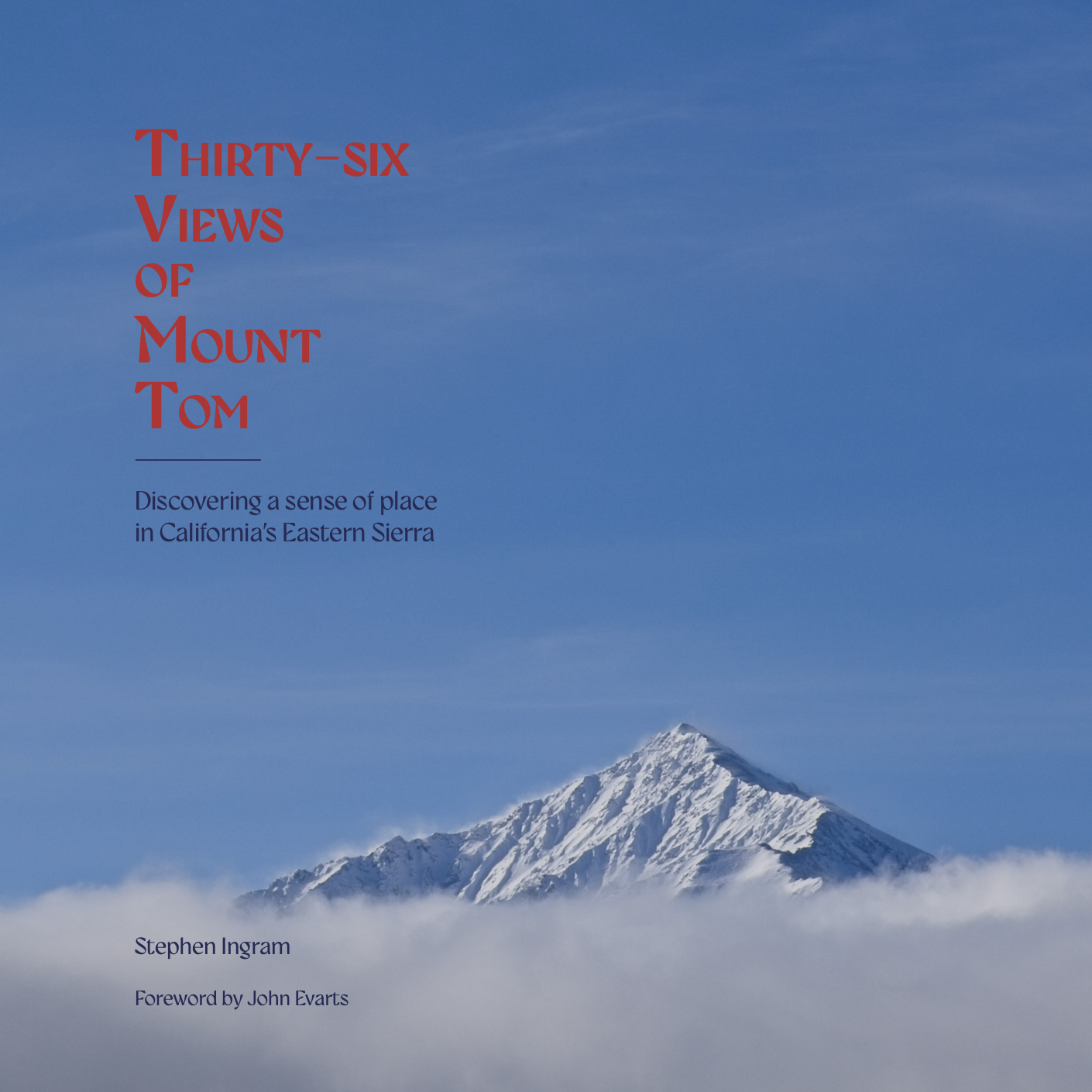
Thirty-six Views of Mount Tom: Discovering a Sense of Place in California’s Eastern Sierra was recently published and is now available here, and at book sellers from Lee Vining to Lone Pine.
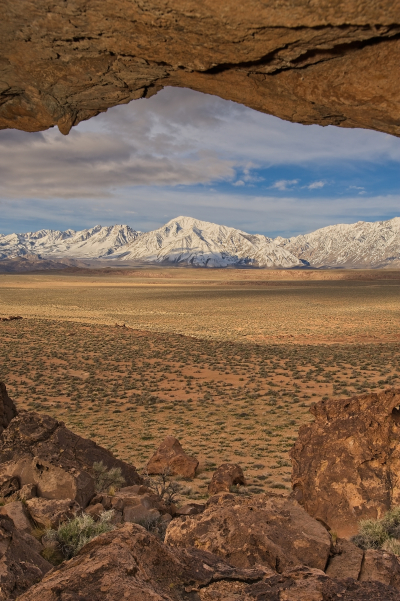
View 4. View of Mt. Tom from “Aeolian Ridge” in the Bishop Tuff of the Volcanic Tableland.

The author as a young man in 2005 with his first editor, Lulu.
I first had the idea for creating this book of photos and essays back in 2003, so it has been a long time coming. I was inspired partly by Gary Snyder and Tom Killion’s The High Sierra of California. This book features Snyder’s journal entries from his decades walking the High Sierra, lengthy quotes from John Muir, and Killion’s beautiful woodcut prints. I had just read Gary Snyder’s preface about Tom Killion giving him a copy of Twenty-eight Views of Mt. Tamalpais, when a really good idea started to dawn on me. Twenty-eight Views was a series of woodcut prints created by Killion in the style of the great Japanese masters of this art form, Hokusai and Hiroshige. Hokusai’s world-renowned masterpiece, The Great Wave, had been a favorite of mine since my youth. This woodblock print was just one piece of Hokusai’s series from the early 1830s called Thirty-six Views of Mount Fuji. This series depicted sacred Mount Fuji from many landscape perspectives, often with people in the foreground.
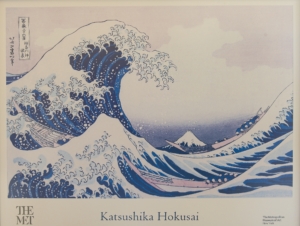
Hokusai’s Great Wave, from Thirty-six Views of Mount Fuji
Similarly, Killion’s 28 “views” of his beloved Mount “Tam” included foregrounds of ridges, bays, bridges, and forests. I too was drawn by the magnetism of a certain mountain to make photographs of it from as many angles, or “views,” as I could. As Gary Snyder wrote of Twenty-eight Views, “It is a perfect evocation of a place and its spirit.” 36 Views of Mount Fuji, 28 Views of Mount Tam. Why not 36 Views of Mount Tom? This idea grabbed me and would not let go.
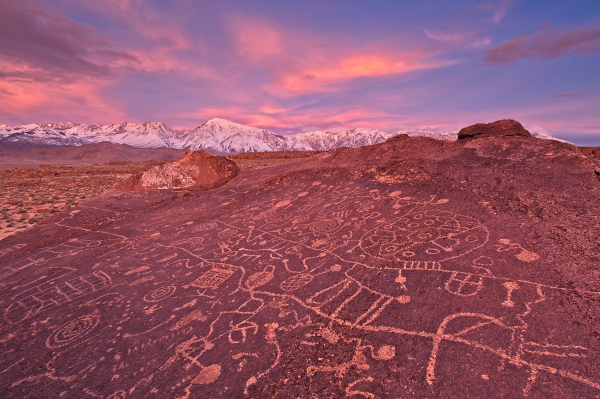
View 21. A large panel of petroglyph rock art at dawn, Volcanic Tableland.
As the years rolled by, my photos of Mount Tom with lengthy captions about whatever foreground I focused on evolved into 850-word essays that explored a “sense of place” within view of this iconic mountain.
As John Evarts, my friend and former editor and publisher, wrote in the Foreward, “Each essay is perfectly paired with a photo that complements its subject and adds context and nuance.”
The 36 views of Mount Tom naturally fell into one of five different categories, or settings, that are important for discovering a sense of place. These five book parts and their views cover the physical, climatological, ecological, cultural, and recreational settings. View subjects range from the Milky Way to the Owens River, from the plight of Sierra Nevada bighorn sheep to the longevity of bristlecone pines, and from mining tungsten to fishing for rainbows. You can see the entire contents page here. I also want to acknowledge the beautiful work of my editor and book designer, Joe Reidhead. His artistic sense of typeface style, size, color, and other elements added an important dimension to Thirty-six Views of Mount Tom.
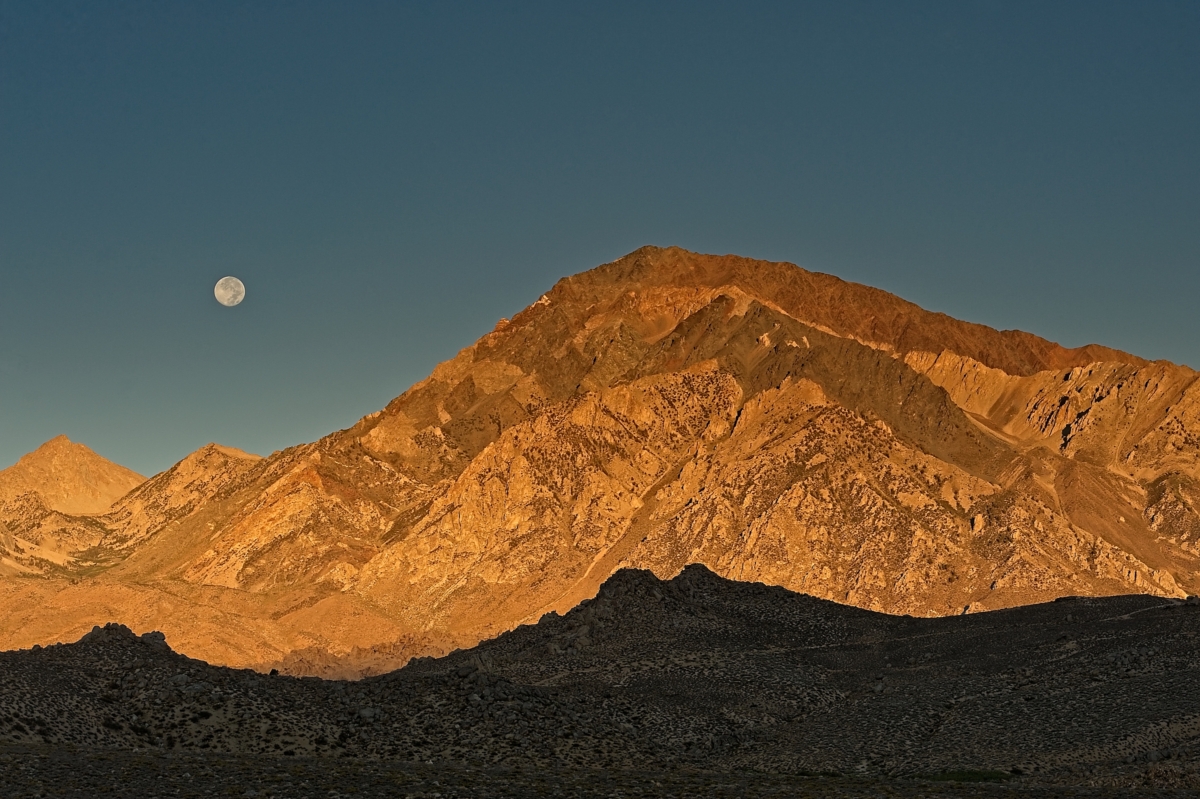
View 2. The east face of Mount Tom displays a diverse assemblage of metamorphic and granitic rock, from Tungsten Hills.
Much more recently, I was inspired by New York Times bestselling author Kim Stanley Robinson’s book, The High Sierra: A Love Story. This book is a fascinating memoir of the author’s time spent walking and loving the Sierra Nevada, but it is also a captivating memoir of a place that many of us treasure. He was kind enough to contribute a lengthy blurb for the back cover of my book, which reads, in part, “Every great mountain deserves a book like this, but few have them… This book is a gift to all Sierra lovers.” I hope you’ll join those of us who love Mount Tom and the Eastern Sierra.
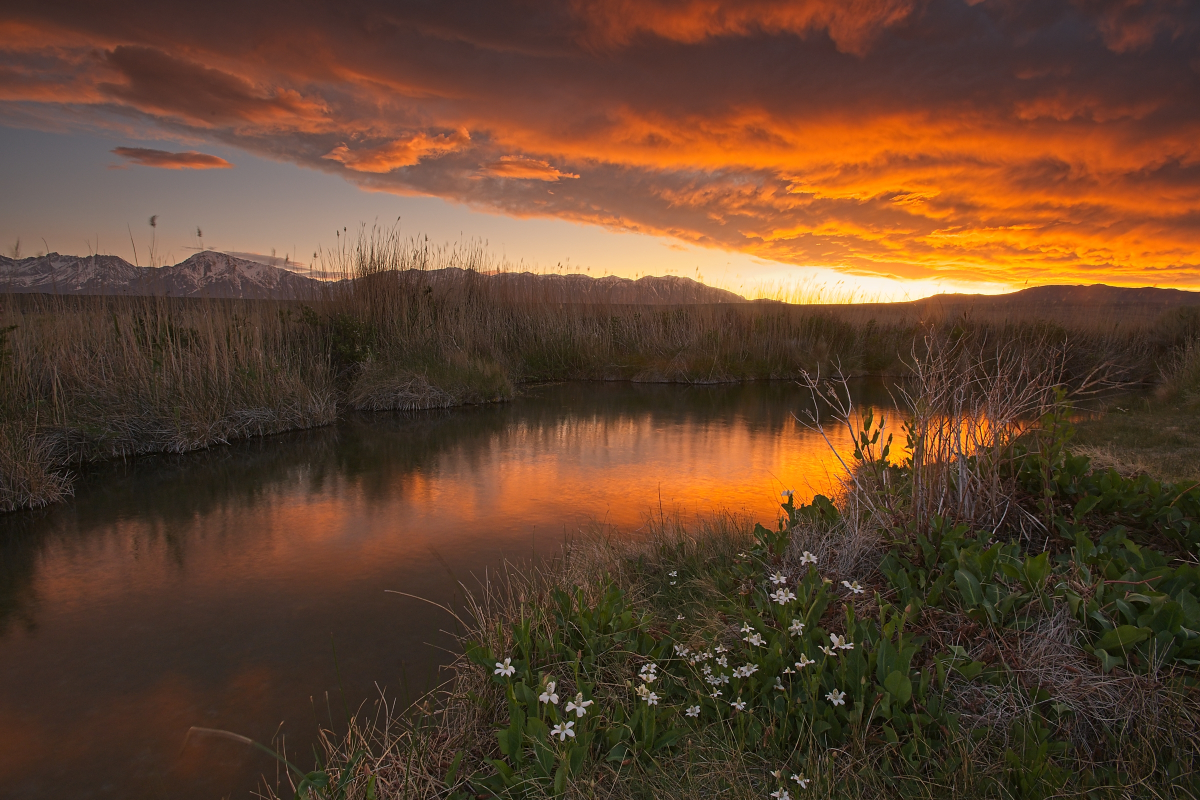
Sunset from BLM Spring, Fish Slough.